
Last Updated: August 2026
Learning that you have a brain tumor is frightening. For many women, the diagnosis comes after month or even years of unexplained headaches, vision problems, dizziness, seizures, hearing changes, or memory difficulties. Many undergo MRI scans expecting to learn they have migraines or another relatively minor condition, only to discover they have a tumor growing inside their skull. After this discovery, some women have filed a Depo-Provera Meningioma lawsuit.
Patients have filed these lawsuits alleging that long-term use of Depo-Provera causes increased risk of certain meningiomas. Naturally, that raises difficult questions:
I wrote this guide to answer those questions.
Our goal is not simply to encourage people to file lawsuits. Instead, we want to help you understand the medical and legal issues surrounding the Depo-Provera litigation so you can make informed decisions about your situation. If you believe you may have a claim, contact our office for a free, confidential case evaluation.
Depo-Provera is the brand name for an injectable prescription medication containing medroxyprogesterone acetate (MPA), a synthetic form of the hormone progesterone.
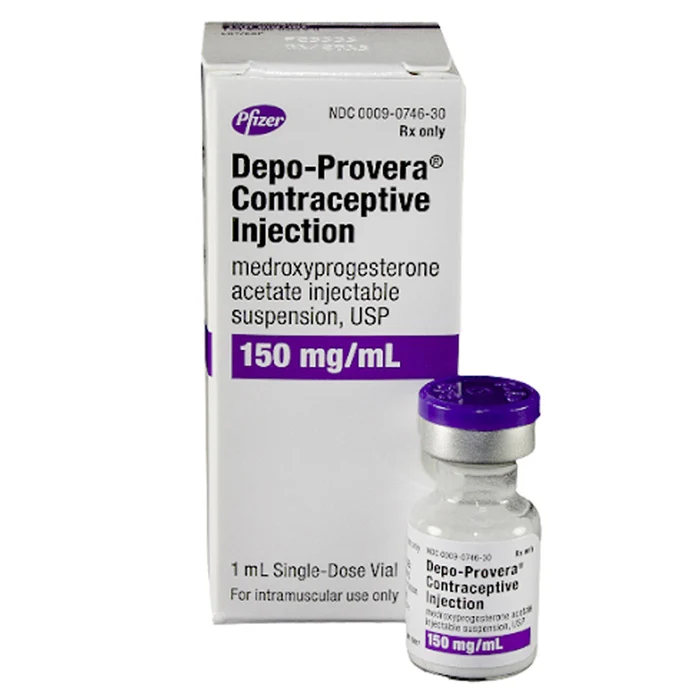
Unlike every day use of birth control pills, patients have Depo-Provera injections approximately every three months.
Some physicians prescribed Depo-Provera because it offered several practical advantages:
Because of these benefits, millions of women around the world have received Depo-Provera injections.
For many patients, it worked exactly as intended.
The current litigation does not allege that every woman who used Depo-Provera developed health problems. Instead, a Depo-Provera Meningioma lawsuit generally focuses on whether some women who used the medication over extended periods developed meningiomas and whether adequate warnings were provided about that potential risk.
To understand the lawsuits, it helps to understand how Depo-Provera works.
Depo-Provera prevents pregnancy primarily by:
These hormonal effects make pregnancy much less likely.
Because each injection remains active for months, patients do not have to remember a daily medication. That convenience is one of the main reasons the drug became so widely used.
A plaintiff may file a Depo-Provera Meningioma lawsuit alleging that prolonged exposure to medroxyprogesterone acetate causes an increased risk of developing certain meningiomas.
The lawsuits generally contend that defendants did not adequately warn patients about this potential risk.
It is important to understand what these lawsuits do—and do not—claim.
The litigation is not based on the idea that every woman who receives Depo-Provera will develop a brain tumor. Most women who use the medication never develop a meningioma.
Instead, plaintiffs generally allege that prolonged use increased the risk for some women and that additional warnings should have been provided so patients and physicians could make informed treatment decisions.
A meningioma is a tumor that develops in the meninges—the protective layers of tissue surrounding the brain and spinal cord.
It can be surprising to learn that a meningioma does not begin inside the brain itself. Instead, it begins in the membranes that cover the brain.
As the tumor grows, however, it can place pressure on nearby brain tissue, nerves, blood vessels, and other important structures.
That pressure—not just the tumor itself—is often responsible for many of the symptoms patients experience.
Most meningiomas are considered benign, meaning they are not cancerous. Unfortunately, the word “benign” can be misleading. A benign brain tumor can still be life-altering. Even a non-cancerous tumor may cause significant neurological problems if it presses against critical parts of the brain.
Depending on its location, a meningioma may affect:
Some tumors grow so slowly that patients have few symptoms for years. Others eventually require surgery, radiation, or long-term monitoring.
Symptoms vary depending on the tumor’s size and location.
Common symptoms include:
Because these symptoms can resemble migraines, inner-ear disorders, aging, stress, or other common conditions, sometimes diagnosis is delayed.
Many patients first discover the tumor after an MRI or CT scan ordered to evaluate persistent neurological symptoms.
Every meningioma is different. Some tumors remain stable for years and require only periodic imaging. Others continue growing.
When treatment becomes necessary, options may include:
MRI scans are used to monitor small tumors with minimal symptoms.
Some patients undergo neurosurgery to remove all or part of the tumor.
Although surgery can be very successful, brain surgery is still major surgery and carries risks that vary based on the tumor’s location and the patient’s overall health.
Radiation is used after surgery or when surgery is not considered the best option.
Even after treatment, many patients continue receiving periodic imaging studies to monitor for recurrence or regrowth.
Researchers have been studying whether prolonged exposure to medroxyprogesterone acetate may increase the likelihood of developing certain meningiomas. Scientists have observed that many meningiomas contain progesterone receptors. That observation prompted additional research into whether synthetic progesterone medications might influence tumor development or growth in some patients.
Research in this area continues, and a Depo-Provera Meningioma Lawsuit generally relies on scientific studies examining the relationship between prolonged exposure to medroxyprogesterone acetate and meningioma risk.
No. Most women who used Depo-Provera will never develop a meningioma. Every potential claim depends on its own facts, including medical history, duration of use, diagnosis, and other relevant information.
That is why individual case evaluations are important.
Although every law firm has its own screening criteria, individuals often contact attorneys after learning they:
Even if you are unsure how long you received injections, your medical and pharmacy records may help reconstruct that history.
To evaluate your case, your attorney will request relevant records from your medical providers, including:
Many people hear the phrase “mass tort” and assume it means a class action. They are different.
In a class action, one or a small number of plaintiffs typically represent a much larger group of people.
In a mass tort, each injured person generally maintains an individual lawsuit based on their own medical history, injuries, and damages. However, because many of the legal and scientific issues overlap, courts may combine certain parts of the case to improve efficiency.
That process allows common issues to be addressed together while preserving each person’s individual claim.
In the remainder of this guide, we explain how MDL No. 3140 works, what the current scientific and regulatory evidence says, who may potentially qualify for a Depo-Provera Meningioma lawsuit, what damages may be available, and what you should know before contacting an attorney.
If you have been diagnosed with a meningioma after using Depo-Provera, you may have heard terms such as “mass tort,” “MDL,” “multidistrict litigation,” or “bellwether trial.” These terms can be confusing, particularly when you are already dealing with a serious medical diagnosis.
Here is what they mean.
MDL stands for multidistrict litigation.
When a large number of lawsuits filed in different federal courts involve similar factual or legal issues, the Judicial Panel on Multidistrict Litigation (JPML) can transfer the cases to one federal district court for coordinated pretrial proceedings. That is what happened with the Depo-Provera litigation.
On February 7, 2025, the JPML centralized each federal Depo-Provera Meningioma lawsuit in the U.S. District Court for the Northern District of Florida as MDL No. 3140. The cases are being overseen by U.S. District Judge M. Casey Rodgers.
The purpose of an MDL is efficiency. Instead of having courts across the country separately address the same scientific evidence, corporate documents, expert testimony, and other common issues, those matters can be coordinated in one proceeding.
Importantly, an MDL is not the same thing as a class action. Your individual claim does not automatically become one large claim belonging to everyone who used Depo-Provera.
This distinction is important. In a traditional class action, a relatively small number of people may represent a larger group of similarly situated individuals. If a class is certified, members of that class may be bound by the outcome of the litigation.
An MDL works differently. Each plaintiff generally maintains an individual claim. The cases are coordinated for certain pretrial proceedings because they share common factual or legal questions.
Those individual cases can ultimately have different outcomes because each person’s:
may be different.
That individual nature is one reason it is important to have your own attorney evaluate your particular circumstances.
The federal court has identified several common issues that a Depo-Provera Meningioma lawsuit may address.
Among them are allegations concerning:
The defendants dispute the plaintiffs’ allegations and maintain that the medication is safe and effective.
Those disputes are important.
The filing of a Depo-Provera Meningioma lawsuit alone does not establish liability. Likewise, the fact that a court has coordinated the lawsuits does not mean that plaintiffs have won. The litigation is ongoing.
Yes.
This is an important recent development.
In 2025, the FDA approved supplemental labeling for Depo-Provera CI and Depo-SubQ Provera 104 that added information concerning meningioma risk. The updated Depo-Provera prescribing information includes a warning under “Warnings and Precautions” concerning meningioma.
The current U.S. prescribing information states that cases of meningioma have been reported following repeated administration of medroxyprogesterone acetate, primarily with long-term use. It also instructs healthcare professionals to monitor patients for signs and symptoms of meningioma and to discontinue Depo-Provera if a meningioma is diagnosed.
This labeling change is significant to the ongoing litigation, but it does not by itself establish that Depo-Provera caused any particular person’s tumor or determine whether any defendant is legally liable.
Those are questions that must be evaluated on the evidence applicable to each case.
The relationship between progestins and meningiomas has been the subject of scientific research for years.
In particular, researchers have examined whether prolonged exposure to certain high-dose progestogens is associated with an increased risk of meningioma.
French health authorities have specifically identified medroxyprogesterone acetate, including Depo-Provera 150 mg, among progestogens for which enhanced monitoring concerning meningioma is recommended.
Research has also examined the role of hormone receptors in meningiomas. Many meningiomas express progesterone receptors, which has prompted continued investigation into whether certain hormonal medications may influence the development or growth of these tumors.
However, scientific research should be interpreted carefully.
An association between a medication and a medical condition does not necessarily establish that the medication caused a particular individual’s condition. Researchers consider factors such as the strength of the association, duration of exposure, biological plausibility, consistency among studies, and other potential explanations.
Those scientific questions are also central to the litigation.
It may.
The scientific research and allegations in a Depo-Provera Meningioma lawsuit has focused particular attention on repeated or long-term exposure.
The current FDA prescribing information specifically refers to reported meningiomas following repeated administration, “primarily with long term use.”
That does not mean there is a simple rule saying that a particular number of injections automatically qualifies someone for a lawsuit.
The relevant facts can include:
An attorney evaluating a potential claim will generally want to understand the entire history rather than relying on one factor.
You may still want to have your case evaluated.
A person does not necessarily lose the ability to investigate a potential claim simply because they stopped using Depo-Provera years ago.
In some circumstances, people may not realize that a previous medication could potentially be relevant to a later diagnosis.
However, statutes of limitations and other deadlines can apply. Those rules vary depending on the facts and the law that applies to a particular claim.
For that reason, it is important not to assume that a claim is either timely or untimely without having an attorney evaluate it.
If you believe you may have a Depo-Provera Meningioma lawsuit claim, contacting an attorney sooner rather than later is generally advisable.
You may still want to speak with an attorney.
Not every meningioma requires surgery.
Some are discovered incidentally and monitored through periodic MRI scans. Others cause symptoms but can be treated without immediate surgery.
Whether an individual claim is viable depends on many factors, including the diagnosis, medical history, exposure history, applicable legal requirements, and the criteria being used to evaluate claims in the litigation.
Do not assume that you are automatically excluded from a Depo-Provera Meningioma lawsuit simply because your tumor was treated conservatively.
Brain surgery can be an important part of a potential claim evaluation.
Surgery may provide extensive medical documentation concerning:
If you underwent surgery, keep copies of your operative report, pathology report, imaging studies, and follow-up records if they are available to you.
Your attorney may also request these records directly from your healthcare providers.
Recurrence or regrowth can be an important medical issue.
Some patients require long-term MRI monitoring after treatment because meningiomas can recur or continue growing.
If you have experienced recurrence, additional surgery, radiation, neurological complications, or other significant treatment, make sure your attorney knows about it.
The severity and progression of an individual’s injury can be relevant to the evaluation of a potential claim.
It is impossible to predict what any individual Depo-Provera Meningioma lawsuit may ultimately be worth.
There is no established settlement amount that applies to every claimant, and no attorney should promise a particular recovery.
Depending on the facts and applicable law, damages in a product liability case may potentially include:
This may include reasonable and necessary medical treatment associated with the injury.
Some patients require continuing treatment, imaging, rehabilitation, or neurological care.
A serious neurological condition can interfere with a person’s ability to work.
In some cases, an injury may affect a person’s ability to earn income in the future.
A serious brain tumor and its treatment can cause substantial physical pain and emotional distress.
Depending on the injury, a person may experience permanent limitations affecting work, daily activities, relationships, or independence.
Additional categories may be available depending on the applicable law and circumstances of the individual claim.
The value of a claim depends on the evidence and circumstances of that particular person. Past verdicts or settlements in other cases do not guarantee a similar result.
This is one of the most common questions people ask.
Unfortunately, there is no honest way to give every claimant a single dollar figure.
Each Depo-Provera Meningioma lawsuit is still developing. A potential recovery can depend on factors including:
Be skeptical of websites promising that every claimant will receive a particular amount.
Mass tort litigation is rarely quick.
Before individual cases can be resolved, the parties may engage in extensive discovery involving:
The court may also select certain cases as bellwether cases.
A bellwether case is an individual case selected to proceed toward trial as a representative example of the issues involved in a larger group of cases.
Bellwether trials can provide both sides with information about how juries may respond to the evidence.
They do not automatically determine the outcome of every other plaintiff’s case.
A verdict in one bellwether case does not mean every plaintiff will receive the same result.
Likewise, one plaintiff’s loss does not necessarily mean every other claim will fail.
Yes, settlement is possible in mass tort litigation.
However, nobody can responsibly predict whether a settlement will occur, when it will occur, or how much money a settlement program might ultimately provide.
There may be negotiations during various stages of litigation.
A settlement could potentially resolve some or many claims, but any proposed settlement would have to be evaluated based on its terms and the circumstances of the individual claimant.
Until an actual settlement is reached and its terms are established, claims about specific future settlement amounts are speculation.
Start by gathering whatever information you have.
You do not need to have a complete legal file before contacting an attorney.
Useful information may include:
If you do not remember all of this information, that is okay.
An attorney can help determine what records may need to be obtained.
If you are currently using Depo-Provera or another prescription medication, do not make medical decisions based solely on information you read on a law firm’s website.
Talk with your doctor or another qualified healthcare professional about your individual medical situation and contraceptive options.
The initial process is usually straightforward.
You will generally be asked about your Depo-Provera use and your meningioma diagnosis.
An attorney or case specialist may ask about your treatment, surgery, symptoms, and medical records.
If the case appears potentially viable, your attorney will request relevant medical, pharmacy, and other records.
An attorney evaluates whether your circumstances satisfy the applicable legal and litigation requirements.
If the firm believes you may have a viable claim, you should be told about the representation process, potential fees and expenses, and what happens next.
You should have an opportunity to ask questions before agreeing to representation.
No. Personal injury and mass tort cases are handled on a contingency-fee basis.
Under a contingency arrangement, the attorney only receives a fee only if there is a recovery.
The exact fee arrangement, litigation expenses, and other terms should always be explained in a written representation agreement before you hire an attorney.
Yes.
Mass tort litigation can involve plaintiffs from across the United States.
The appropriate attorney and applicable law depend on the circumstances of the individual case.
Our office is located in San Antonio, Texas, and we evaluate potential mass tort matters for individuals who may have claims arising from injuries associated with pharmaceutical products and other consumer products.
If your circumstances appear appropriate for a Depo-Provera Meningioma Lawsuit, we can explain your options and, when appropriate, work together with other experienced attorneys who handle complex pharmaceutical litigation.
The litigation involves allegations that repeated or long-term exposure to Depo-Provera or other products containing medroxyprogesterone acetate can increase the risk of developing meningioma and that defendants failed to provide adequate warnings about the alleged risk.
The defendants dispute the allegations.
Yes. Federal Depo-Provera product liability cases have been centralized as MDL No. 3140 in the Northern District of Florida.
No. The federal litigation is an MDL rather than a traditional class action. Individual plaintiffs generally maintain individual claims.
The specific defendants can depend on the product involved and the circumstances of an individual case. Pfizer entities are among the defendants involved in the litigation.
The litigation alleges that Depo-Provera can cause or contribute to meningioma. The defendants dispute those allegations. The scientific and legal questions concerning causation remain part of the ongoing litigation.
The FDA’s current labeling for Depo-Provera includes a warning concerning reported meningiomas, particularly following repeated administration and primarily with long-term use.
They are completely different conditions.
A meningioma is a tumor arising from the membranes surrounding the brain and spinal cord.
Meningitis is inflammation of the membranes surrounding the brain and spinal cord, usually caused by an infection or another inflammatory process.
A person does not have a Depo-Provera meningioma claim simply because they have had meningitis.
Potentially.
Most meningiomas are benign, but a benign tumor can still cause significant neurological injury and may require surgery, radiation, or ongoing medical care.
Whether a particular diagnosis meets the requirements for a potential legal claim depends on the individual circumstances.
There is no universal number of injections that automatically guarantees eligibility.
Potential claims are evaluated based on the complete medical and exposure history.
You should discuss your circumstances with an attorney rather than assuming you do or do not qualify.
Duration of exposure can be relevant, but it is not the only consideration.
You may still want to have your circumstances evaluated.
Potential deadlines can depend on when the injury occurred, when it was discovered, and which state’s law applies.
Talk with your healthcare provider about your medical options. Do not change prescription medication solely because of information on a law firm website.
That information may be relevant to a potential failure-to-warn claim, but the legal analysis is more complicated than simply determining whether a particular doctor gave a warning.
An attorney will need to evaluate the applicable law, labeling history, medical records, and other evidence.
That is common.
Your attorney may request medical records, pharmacy records, insurance records, and other documentation to help reconstruct your treatment history.
An attorney may be able to obtain relevant records with your authorization.
You can still discuss your history with an attorney.
The first step is determining whether you actually received the medication and when.
You may still have a potential claim depending on the circumstances.
The severity of the injury and applicable litigation criteria will need to be evaluated individually.
Surgery can provide important evidence concerning your diagnosis and treatment.
Your operative and pathology records may be particularly useful.
Tell your attorney about every procedure.
Multiple surgeries, recurrence, radiation, neurological complications, and other treatment can be relevant to the evaluation of damages.
Permanent impairment can be an important component of a personal injury claim.
The nature and severity of your impairment should be documented through your medical records and, where appropriate, expert evaluation.
Lost wages and loss of earning capacity may be relevant damages depending on the applicable law and evidence.
Keep documentation of your employment, income, time missed from work, and any changes to your ability to work.
There is no predetermined amount.
Potential value depends on the strength of the individual claim, medical evidence, severity of injury, damages, applicable law, and the ultimate outcome of the litigation.
There is no absolute time table at this time.
The litigation is ongoing, and it would be misleading to promise a particular settlement date.
No.
Waiting could potentially create problems if a legal deadline applies to your claim.
It is better to have your circumstances evaluated promptly.
Not necessarily.
Mass tort cases involve substantial pretrial proceedings, and many cases may resolve without the individual plaintiff personally appearing in court. However, the requirements of each case can vary.
Not necessarily.
The location and procedures applicable to an individual plaintiff depend on the litigation and the attorney representing the claimant.
If you are unable to handle your own legal affairs, a family member or legal representative may potentially be involved depending on the circumstances.
If the claimant has died, separate rules may apply to wrongful-death or survival claims.
Possibly.
The answer depends on the circumstances of the death, the relationship of the person seeking to bring the claim, applicable state law, and other factors.
Mass tort litigation can involve people throughout the United States.
Our office can evaluate your circumstances and explain whether we can assist or whether another attorney would be more appropriate.
Potentially, yes.
Every state has statutes of limitations and other deadlines that can affect personal injury and product liability claims.
Because these rules can be complicated, do not rely on a generic deadline found on the internet.
You should not hire multiple attorneys for the same claim without understanding your existing representation agreement.
If you already have counsel and have questions about your representation, discuss those questions with your current attorney.
Mass tort litigation is different from a typical personal injury case.
These cases can involve complicated scientific evidence, pharmaceutical research, corporate documents, federal litigation procedures, expert witnesses, and individual medical histories.
Our office is based in San Antonio, Texas, and we have experience evaluating personal injury claims and joining together with attorneys who have experience handling complex litigation.
We understand that contacting a lawyer after a serious medical diagnosis can feel overwhelming.
You do not need to understand the MDL process before contacting us.
You do not need to know whether you have a legally viable claim.
And you do not need to have every medical record in your possession.
Our job is to listen to what happened, ask the appropriate questions, and help determine what your options may be.
If we believe another attorney or firm is better positioned to handle your claim, we can discuss that with you rather than asking you to navigate the mass tort process on your own.
If you received Depo-Provera and were later diagnosed with a meningioma, you may have questions about whether the two could be related and whether you have a legal claim.
You do not have to figure that out by yourself.
Contact our office today for a free, confidential case evaluation. There is no up-front charge.
We can discuss your Depo-Provera use, your diagnosis, your treatment history, and the circumstances of your potential claim.
There is no obligation to pursue a lawsuit simply because you contact our office.
The sooner you speak with an attorney, the sooner you can understand your legal options and determine whether you have a viable Depo-Provera Meningioma Lawsuit.
Contact our San Antonio office today to request a free Depo-Provera meningioma case evaluation.
This page is provided for general informational purposes about a Depo-Provera Meningioma Lawsuit and is not legal advice or medical advice.
The information concerning a Depo-Provera Meningioma Lawsuit describes allegations made by plaintiffs and developments in ongoing litigation. The defendants dispute the allegations.
Every legal matter is different. The outcome of an individual claim depends on its particular facts, the applicable law, available evidence, and the development and resolution of the litigation.
Nothing on this website creates an attorney-client relationship.
Do not rely on information on this page as a substitute for advice from an attorney concerning your individual circumstances.
If you are currently taking Depo-Provera or another prescription medication, consult your healthcare provider before making changes to your treatment.