
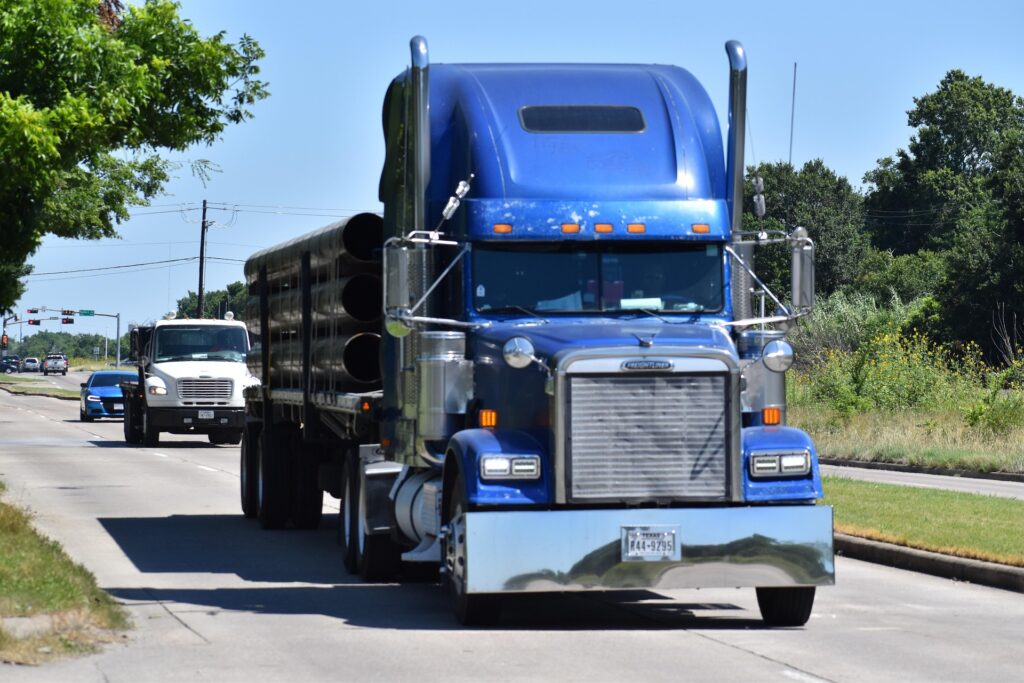
A collision with an 18-wheeler can be very different from an ordinary car accident. Commercial trucks are larger and heavier than passenger vehicles, the resulting injuries can be catastrophic, and the investigation may involve a trucking company, multiple insurance policies, federal safety regulations, and evidence that does not exist in a typical car accident case.
If you or a family member was seriously injured in a commercial truck accident in San Antonio, understanding those differences can be important. The trucking company and its insurer may begin investigating the collision immediately, while the injured person is still receiving medical treatment.
D. Willis Law helps people injured in serious accidents understand their legal options and determine how to pursue compensation under Texas law.
A truck accident is not simply a car accident involving a larger vehicle.
Commercial trucking is a regulated industry. Depending on the truck and the type of operation involved, federal and state regulations may govern driver qualifications, hours of service, vehicle inspection and maintenance, recordkeeping, cargo, and other safety issues.
A serious trucking case may also involve considerably more evidence than a typical passenger-vehicle collision.
That evidence can help answer important questions. Was the driver fatigued? Was the truck properly maintained? Did the driver have a history that should have concerned the trucking company? Was the cargo properly secured? What was the truck doing immediately before the collision?
Answering those questions can require an investigation that goes well beyond the police crash report.
Evidence is important in any personal injury case, but preserving evidence can be particularly important after a commercial truck collision.
Depending on the circumstances, relevant evidence may include:
Electronic logging device records
Engine or electronic control module data
Driver qualification records
Hours-of-service records
Vehicle inspection and maintenance records
Driver vehicle inspection reports
Dispatch and trip information
Bills of lading and cargo records
Drug and alcohol testing information when applicable
Cellphone or electronic communications
Dash-camera or other video
Photographs of the truck and collision scene
GPS and location information
The trucking company’s accident records
Some information is retained only for limited periods, and physical evidence can change after a collision. Vehicles may be repaired, electronic information may be overwritten, and surveillance footage may disappear.
When appropriate, an attorney can send preservation notices identifying evidence that should be retained.
One of the most important differences between truck accidents and ordinary car accidents is the number of potentially responsible parties.
The truck driver may have caused the collision, but the investigation should not necessarily stop there.
Depending on the circumstances, potentially responsible parties may include:
The commercial truck driver
The trucking or motor-carrier company
An employer
The owner of the tractor
The owner of the trailer
A company responsible for maintenance or repairs
A cargo-loading company
Another contractor involved in the transportation
A manufacturer of a defective truck or component
Another driver whose negligence contributed to the collision
Determining who may be legally responsible requires understanding the relationships among the driver, carrier, vehicle owners and other businesses involved.
Those relationships are not always obvious from the information exchanged at the accident scene.
A trucking company may face liability for the conduct of a driver in appropriate circumstances. Other claims involving the company’s own conduct may also arise depending on the evidence and Texas law.
Questions worth investigating can include whether the company properly evaluated the driver, monitored safety, maintained its equipment, complied with applicable regulations, or encouraged unsafe practices.
For example, an investigation may examine:
The driver’s qualifications and driving history
Prior crashes or safety violations
Training
Hours worked
Inspection and maintenance practices
Known mechanical problems
Company safety policies
Compliance with applicable federal regulations
Texas also has specific procedural rules governing certain lawsuits arising from commercial motor-vehicle accidents. How claims against a commercial driver and the company are presented and tried can therefore involve issues that do not arise in an ordinary automobile case.
Fatigue is an important issue to investigate in some commercial truck crashes.
Federal Motor Carrier Safety Administration rules limit the amount of time many property-carrying commercial drivers may drive.
Under the generally applicable federal hours-of-service rules, a property-carrying driver may drive a maximum of 11 hours after 10 consecutive hours off duty. The driver generally may not drive beyond the 14th consecutive hour after coming on duty following the required off-duty period.
The regulations also include rules concerning driving breaks, weekly on-duty limits, sleeper berths, and exceptions that may apply in particular circumstances.
The existence of these regulations does not mean that every truck accident was caused by driver fatigue. But when fatigue may have contributed to a collision, electronic logs and other records can become important evidence.
Many commercial drivers who are required to keep records of duty status use an electronic logging device, commonly called an ELD.
An ELD synchronizes with the vehicle’s engine and records information relating to driving time and duty status. The records can help determine when a driver was driving, on duty, off duty, or using a sleeper berth.
In an appropriate truck accident case, these records can help determine whether the driver complied with applicable hours-of-service requirements.
They can also be compared with other evidence such as dispatch information, fuel receipts, GPS information and trip records.
People often refer to electronic information stored by a commercial truck as its “black box.”
The terminology can be somewhat misleading because trucks can contain different electronic systems, and the information available depends on the particular vehicle and equipment.
Electronic control modules and related systems may contain useful information concerning vehicle operation around the time of a collision. Depending on the system, available information may include vehicle speed, braking, engine data or other operational information.
This evidence can be particularly valuable when drivers disagree about what occurred immediately before impact.
Because electronic information can potentially be lost or overwritten, determining what data exists and taking appropriate steps to preserve it can be important after a serious collision.
A trucking investigation may involve records that most people injured in an accident have never encountered.
Federal motor-carrier regulations require certain carriers to maintain records relating to drivers, vehicles and safety compliance.
Depending on the case, an attorney may investigate records concerning:
Driver qualifications
Driving history
Medical certification
Hours of service
Vehicle inspections
Maintenance and repairs
Brake inspections
Prior accidents
Safety violations
Drug and alcohol testing
Cargo and dispatch information
Not every record will matter in every case.
The goal is not simply to collect documents. It is to determine why the collision happened and whether the driver, trucking company or another party failed to meet an applicable safety obligation.
Commercial truck collisions can happen for many reasons.
Common issues that may contribute to a serious truck accident include:
Driver fatigue
Speeding
Following too closely
Distracted driving
Unsafe lane changes
Failure to yield
Driving too fast for conditions
Inadequate driver training
Improper vehicle maintenance
Brake or tire problems
Improperly loaded or secured cargo
Driving while impaired
Failure to conduct appropriate inspections
Pressure to meet unrealistic delivery schedules
More than one factor can contribute to the same collision.
A mechanical problem, for example, may combine with excessive speed or inadequate inspection. A fatigued driver may react too slowly to traffic conditions that another driver could have handled safely.
A proper investigation looks at the entire sequence of events.
San Antonio sits along several major transportation corridors used by commercial vehicles.
I-10 and I-35 are major interstate freight routes, while I-37 connects San Antonio toward the Gulf Coast. Loop 410 and Loop 1604 also carry substantial local and commercial traffic.
Truck collisions can occur anywhere, but high-speed interstate crashes can be particularly serious because of the size of commercial vehicles and the forces involved.
Local construction and changing traffic patterns can create additional complications.
A San Antonio truck accident case may therefore require understanding not only the vehicles involved but also the roadway, traffic pattern and conditions at the location of the collision.
The term “truck accident” includes more than traditional 18-wheelers.
Serious commercial vehicle cases may involve:
Tractor-trailers
Semi-trucks
18-wheelers
Tanker trucks
Flatbed trucks
Dump trucks
Delivery trucks
Box trucks
Construction vehicles
Tow trucks
Commercial vans
Company vehicles
The applicable regulations and insurance issues can vary depending on the vehicle, its weight, how it was being used, what it was carrying and whether it was operating in interstate or intrastate commerce.
The size and configuration of tractor-trailers can produce types of collisions that are less common with passenger vehicles.
These include:
A jackknife occurs when the tractor and trailer fold toward each other rather than remaining aligned. The trailer can sweep across multiple lanes and strike other vehicles.
An underride collision occurs when a smaller vehicle travels underneath part of a commercial truck or trailer. These crashes can cause catastrophic or fatal injuries.
A truck may roll over because of excessive speed, sudden steering, shifting cargo, road conditions or other factors.
Improperly loaded or secured cargo can shift the truck’s center of gravity or fall onto the roadway, creating a hazard for surrounding motorists.
Because of their weight, commercial trucks require substantial distance to stop. Excessive speed, distraction, fatigue or inadequate following distance can contribute to severe rear-end collisions.
Large commercial vehicles have substantial areas around the truck where other vehicles may be difficult for the driver to see. Drivers must account for those limitations when changing lanes or turning.
Tractor-trailers require more room to make turns. Improper turns can trap or strike nearby vehicles, bicyclists or pedestrians.
The disparity in size between a fully loaded tractor-trailer and a passenger vehicle can produce devastating injuries.
Truck accident injuries may include:
Traumatic brain injuries
Spinal cord injuries
Neck and back injuries
Herniated discs
Paralysis
Broken bones
Crush injuries
Internal organ injuries
Severe lacerations
Burns
Amputations
Scarring and disfigurement
Permanent physical impairment
Some people require surgery, rehabilitation, future medical treatment or assistance with daily activities.
The long-term effects of the injury can be just as important as the medical bills incurred immediately after the crash.
Your health should come first.
Call 911 when appropriate and seek medical treatment for injuries. If you are physically able to do so safely, photographs and video of the vehicles, roadway and surrounding area may become valuable evidence.
Try to obtain information identifying the commercial vehicle, trucking company and driver. Photographs of markings, company names, license plates and identifying numbers on the truck can be useful.
You should also obtain contact information from witnesses when possible.
Do not put yourself in danger trying to investigate the collision scene.
After a serious accident, consider speaking with a lawyer before giving a detailed recorded statement to the trucking company’s insurance carrier or signing broad medical authorizations.
You should be careful when communicating with an insurer representing the trucking company.
Always be truthful, but understand that the insurance company’s interests are different from yours.
An adjuster may ask questions about how the crash happened, your actions before the collision, your injuries, prior medical conditions and other subjects that can affect the claim.
In a serious injury case, consider obtaining legal advice before giving a recorded statement to the other side’s insurer.
Fault depends on the facts of the collision.
Evidence may show that the commercial driver failed to use reasonable care by speeding, following too closely, driving while distracted, making an unsafe maneuver or otherwise operating the truck negligently.
Other evidence may point toward the trucking company or another business.
A truck accident investigation may therefore combine traditional crash evidence with commercial records and regulatory information.
Potential evidence can include:
The police crash report
Scene photographs
Witness statements
Video
Electronic vehicle information
Driver logs
Dispatch records
Maintenance records
Inspection records
Driver qualification information
Cellphone evidence when appropriate
Accident reconstruction
Expert testimony
The strongest cases are built around evidence rather than assumptions about what caused the collision.
Texas follows a proportionate-responsibility system.
Under Texas law, a claimant generally cannot recover damages if the claimant’s percentage of responsibility is greater than 50 percent.
If the claimant is 50 percent or less responsible, recoverable damages generally are reduced according to that percentage of responsibility.
For example, if a jury determined that a person suffered $1 million in damages but was 20 percent responsible for the collision, the recoverable amount generally would be reduced to reflect that percentage.
This makes attempts to shift blame particularly important in serious truck accident cases.
The damages available depend on the facts of the individual case.
Potential damages may include compensation for:
Medical expenses
Future medical care
Lost income
Loss of earning capacity
Physical pain
Mental anguish
Physical impairment
Disfigurement
Property damage
Catastrophic injuries may require evaluating losses extending years or even decades into the future.
That can require medical evidence, employment information and, in appropriate cases, expert analysis concerning future care or earning capacity.
There is no legitimate online formula for calculating the value of a truck accident case.
Case value can depend on the severity and permanence of the injuries, medical treatment, future care, lost income, impairment, disfigurement, strength of the liability evidence and available sources of recovery.
The amount of insurance available can also be important.
Commercial trucking cases may involve insurance arrangements that are different from an ordinary personal auto policy. Determining what coverage applies may require investigating the motor carrier, vehicle ownership and other businesses involved.
A catastrophic injury does not automatically produce a particular settlement amount. Each case must be evaluated on its own evidence.
Potentially.
Commercial truck accidents can involve complicated business relationships. The driver may work for one company while the tractor or trailer is owned or leased by another. Other businesses may be involved in cargo, maintenance or other aspects of the transportation.
The existence of multiple companies does not automatically mean that every company or insurance policy is responsible.
But in a serious case, identifying the relevant companies and investigating potentially applicable coverage can be an important part of determining available sources of recovery.
Labeling a driver an “independent contractor” does not automatically answer every liability question.
The actual relationships among the driver, motor carrier, equipment owners and other companies must be examined under applicable law.
Relevant information can include contracts, ownership and leasing arrangements, operating authority, control over the work and the circumstances of the particular trip.
A trucking company should not automatically be assumed responsible merely because its name appears on a vehicle, nor should it automatically be assumed free from responsibility because a driver is described as an independent contractor.
The facts matter.
Commercial motor carriers subject to federal regulations have vehicle inspection, repair and maintenance obligations.
Federal regulations generally require motor carriers to systematically inspect, repair and maintain vehicles subject to their control and keep parts and accessories in safe operating condition.
Maintenance issues that can contribute to a crash may include:
Defective brakes
Worn or damaged tires
Lighting problems
Steering defects
Coupling problems
Suspension issues
Other mechanical defects
Maintenance records, inspection reports and post-collision examination of the vehicle may help determine whether a mechanical problem contributed to the crash.
Cargo can affect how a commercial truck handles.
Improper weight distribution, shifting cargo or inadequately secured cargo can contribute to loss of control, rollovers or cargo falling onto the roadway.
Responsibility for loading cargo may vary.
Depending on the circumstances, the investigation may involve the driver, motor carrier, shipper, loader or another company.
Bills of lading, loading information, photographs and other records may help establish what was being transported and who was involved.
Some commercial truck collisions are fatal.
When negligence causes a death, Texas law may allow certain surviving family members to pursue a wrongful-death claim. A separate survival claim may also exist under appropriate circumstances.
Fatal truck crashes can involve substantial investigations because evidence may be necessary to determine not only how the collision occurred but also which companies may be responsible.
Families dealing with a fatal collision should obtain individualized advice about the claims that may be available and the applicable deadlines.
Texas generally provides a two-year limitations period for personal injury claims.
Under Texas Civil Practice and Remedies Code §16.003, a personal injury lawsuit generally must be brought no later than two years after the cause of action accrues. Claims involving death are also subject to limitations rules.
Exceptions can apply, and particular cases can involve additional deadlines or notice requirements. A general website should therefore not be used to calculate the exact deadline in an individual case.
There is another reason not to wait.
The statute of limitations tells you how long you may have to file a lawsuit. It does not guarantee that important evidence will still exist if an investigation begins months or years after the collision.
There is no standard timeline.
A truck accident involving relatively straightforward injuries and undisputed responsibility may progress differently from a catastrophic injury case involving several companies, disputed liability and extensive expert analysis.
The medical situation also matters.
It can be difficult to evaluate a serious injury fairly before the prognosis and future treatment needs are reasonably understood.
If a lawsuit becomes necessary, discovery may involve depositions, company records, electronic evidence and experts. That process can take time.
The goal should not simply be to finish the case as quickly as possible. The goal should be to understand the evidence and damages before making important settlement decisions.
Many truck accident claims resolve without a trial.
Others require litigation because the parties disagree about responsibility, damages or an appropriate settlement.
Texas has specific statutes addressing the trial of certain commercial motor-vehicle accident cases. Those provisions can affect how some claims against commercial drivers and their employers are handled in court.
Whether a case should settle or proceed through litigation depends on its particular facts.
A person considering a settlement should understand both the strengths and weaknesses of the claim and what rights will be released by accepting the settlement.
Not every collision involving a commercial vehicle requires an attorney.
But obtaining legal advice becomes more important when the accident involves:
Serious or permanent injuries
Surgery
Traumatic brain injury
Spinal cord injury
Amputation
Significant disfigurement
Death
Disputed responsibility
Multiple vehicles
Multiple companies
Commercial insurance
Questions about driver fatigue
Potential maintenance failures
Lost or improperly secured cargo
The more serious the injury and the more complicated the investigation, the more important it can become to preserve evidence and identify potentially responsible parties early.
An attorney evaluating a serious commercial truck collision should look beyond the obvious question of whether the truck driver received a citation.
Depending on the case, I would want to know:
Who employed or contracted with the driver?
Who owned the tractor?
Who owned the trailer?
Which motor carrier was operating the vehicle?
What was the driver doing before the collision?
How many hours had the driver worked?
What do the electronic logs show?
What electronic data exists on the truck?
Was the truck properly inspected and maintained?
Were there prior mechanical problems?
What was the truck carrying?
Who loaded the cargo?
What insurance policies may apply?
Are there witnesses or video?
Does the physical evidence agree with the drivers’ accounts?
Not every question will matter in every case.
But asking the right questions early can reveal evidence that would otherwise be missed.
Serious truck accident cases can combine Texas personal injury law, federal motor-carrier regulations, corporate records, commercial insurance, electronic evidence and complex medical damages.
Meanwhile, the injured person may be recovering from surgery, unable to work or caring for a family member with catastrophic injuries.
A lawyer can investigate the collision, communicate with insurers and other parties, preserve evidence, identify potentially responsible companies, evaluate damages and determine whether litigation is necessary.
Just as importantly, a good lawyer should explain what is happening and give you enough information to make informed decisions about your own case.
Personal injury cases are commonly handled on a contingency-fee basis.
Under a contingency arrangement, the attorney’s fee generally is calculated as a percentage of the recovery rather than being billed by the hour as the case proceeds. This means that you don’t pay attorney’s fee unless an attorney wins your case or achieves a settlement for you.
The exact fee and responsibility for case expenses should be explained in a written agreement before representation begins.
D. Willis Law offers free initial consultations. You can discuss the circumstances of the accident and your legal options before deciding how to proceed.
If you or someone in your family has been seriously injured in an 18-wheeler, semi-truck or other commercial vehicle accident, the investigation may involve much more than determining which driver received a ticket.
Electronic evidence, trucking-company records, maintenance information, driver logs, insurance coverage and federal safety regulations can all become important.
D. Willis Law can review the circumstances of your accident, help you understand your legal options and determine what steps may be appropriate.
Contact D. Willis Law for a free and confidential consultation about your San Antonio truck accident case.
This page is provided for general informational purposes only and does not constitute legal advice. Every truck accident claim is different, and the applicable law, insurance coverage, deadlines and potential damages depend on the particular circumstances. Reading this page or contacting D. Willis Law does not create an attorney-client relationship. An attorney-client relationship is established only through an appropriate written agreement.