
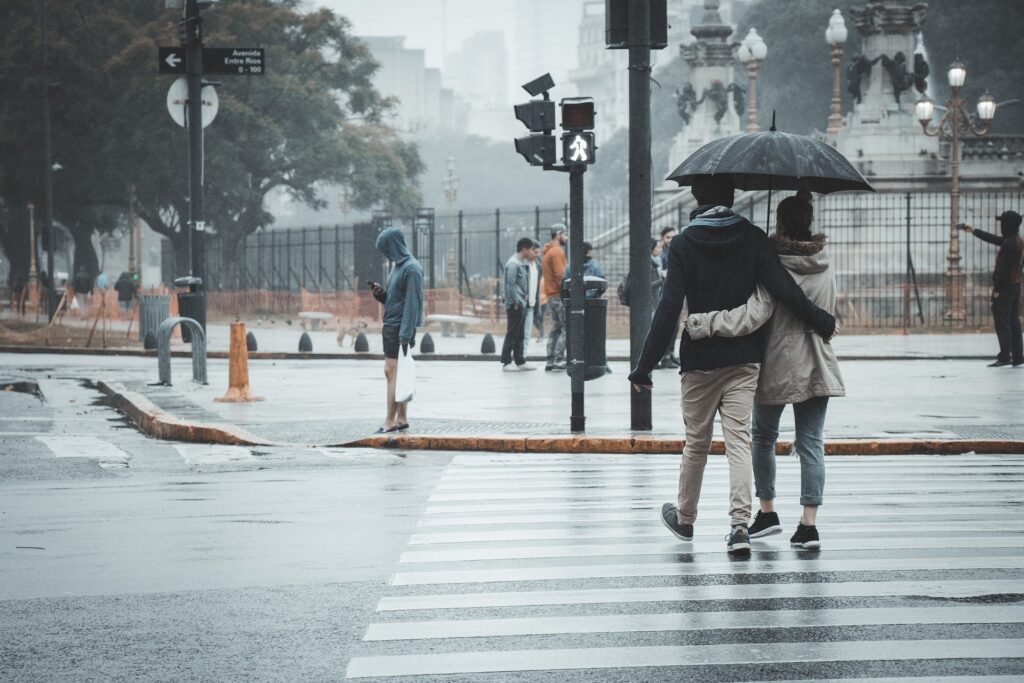
Pedestrians have almost no protection when struck by a car, pickup truck, SUV, or commercial vehicle. Even a collision that occurs at a relatively low speed can cause broken bones, brain injuries, spinal injuries, or permanent disability.
Texas law gives pedestrians important rights, particularly when crossing streets at intersections and crosswalks. But pedestrian accident claims can become complicated when a driver claims the pedestrian entered the roadway unexpectedly, crossed outside a crosswalk, or contributed to the collision.
If you or a family member was seriously injured while walking in San Antonio, D. Willis Law can help you understand your rights, investigate what happened, and determine your options for pursuing compensation under Texas law.
Pedestrians represent a relatively small percentage of people involved in traffic crashes but a disproportionately large percentage of traffic deaths.
According to the Texas Department of Transportation, pedestrians were involved in only about one percent of Texas traffic crashes in 2024 but accounted for approximately 19 percent of roadway fatalities. Texas recorded 6,095 pedestrian-involved crashes that year, resulting in 772 pedestrian deaths and 1,455 serious injuries.
The problem is particularly significant in San Antonio.
In November 2025, the City of San Antonio reported that the San Antonio area had 769 pedestrian-involved traffic crashes during the previous year, resulting in 83 fatalities and 168 serious injuries.
San Antonio has responded with its Vision Zero program and other efforts intended to identify dangerous corridors and reduce serious traffic injuries.
For someone who has already been injured, however, statistics are not the primary concern. The immediate questions are why the collision occurred, who was responsible, what insurance is available, and how the injuries will affect the person’s future.
Texas has specific laws governing pedestrians and motorists at crosswalks.
Under Texas Transportation Code §552.003, when no traffic-control signal is in place or operating, a driver must stop and yield to a pedestrian crossing in a crosswalk when the pedestrian is on the driver’s half of the roadway or approaching closely enough from the opposite half to be in danger.
The law also prohibits a driver approaching from behind from passing a vehicle that has stopped at a crosswalk to allow a pedestrian to cross.
Pedestrians have responsibilities as well. A pedestrian may not suddenly leave a curb or other place of safety and enter a crosswalk so close to an approaching vehicle that the driver cannot stop and yield.
The facts therefore matter.
A pedestrian’s presence in a crosswalk can be extremely important evidence, but the complete circumstances surrounding the collision still need to be investigated.
Pedestrians and drivers must obey applicable traffic-control signals.
A pedestrian who receives a walk signal generally may proceed across the roadway in the direction of the signal, subject to applicable Texas law.
Drivers making turns must also account for pedestrians lawfully using crosswalks.
This can become particularly important when a driver turns right or left through a crosswalk while concentrating on other vehicle traffic rather than looking for someone walking across the street.
A green light for a motorist does not mean the driver can ignore a pedestrian who is lawfully in the crosswalk.
Many pedestrian accidents are preventable.
Common causes can include:
Distracted driving
Failure to yield at a crosswalk
Speeding
Unsafe left or right turns
Running red lights or stop signs
Driving while intoxicated
Failure to maintain a proper lookout
Backing without checking for pedestrians
Driving too fast for conditions
Passing a vehicle stopped for a pedestrian
Failing to see a pedestrian at night
Entering or exiting a driveway without checking the sidewalk
Sometimes several factors contribute to the same collision.
A driver may be distracted while turning, for example, or may be traveling too fast to react safely after finally noticing a pedestrian.
A proper investigation should determine what actually happened rather than simply accepting the first explanation offered at the scene.
A few seconds of driver inattention can be devastating for someone crossing a street.
Phones are an obvious source of distraction, but drivers can also become distracted by navigation systems, passengers, food, vehicle controls, or other activities.
The City of San Antonio reported in 2026 that approximately one out of three local crashes involved distracted driving. The City also reported that police records identified distracted driving as contributing to the deaths of 11 pedestrians in 2025.
A distracted-driving case may require more than simply asking the driver whether a phone was being used.
Depending on the circumstances, evidence can include witness testimony, video, cellphone records obtained through appropriate legal procedures, vehicle information, and the driver’s own statements.
Intersections can be particularly dangerous for pedestrians.
A driver preparing to turn may concentrate on finding a gap in vehicle traffic and fail to notice someone entering or already occupying the crosswalk.
Right-turn accidents can occur when a driver looks primarily to the left for approaching traffic and begins turning without checking the crosswalk to the right.
Left-turn collisions can occur when a driver attempts to cross opposing traffic and focuses on approaching vehicles rather than the pedestrian crossing the street.
Video from nearby businesses, dash cameras, traffic cameras when available, witnesses, and physical evidence can help determine what happened.
Being struck while lawfully using a crosswalk can provide important evidence in a pedestrian injury claim.
Texas law expressly requires motorists to stop and yield under certain circumstances when a pedestrian is crossing in a crosswalk.
But the investigation should not end simply because a crosswalk was present.
Important questions may include:
Was the crosswalk marked or unmarked?
Was there a traffic signal?
What signal did the pedestrian have?
What signal did the driver have?
Was the vehicle turning?
How long had the pedestrian been in the roadway?
Could the driver see the pedestrian?
Was the driver distracted?
Were there witnesses?
Is there video of the collision?
These details can become important if the insurance company disputes responsibility.
Not every legal crosswalk has painted white lines.
Texas law recognizes crosswalks at intersections even when pavement markings are not present under circumstances defined by the Transportation Code.
This is important because a driver or insurance adjuster may incorrectly assume that a pedestrian was “jaywalking” simply because there were no painted crosswalk lines.
Whether a particular location legally qualifies as a crosswalk depends on the roadway and intersection.
Photographs and measurements of the location can therefore become important evidence.
Crossing outside a crosswalk does not automatically mean you have no case.
Under Texas Transportation Code §552.005, a pedestrian crossing a roadway outside a marked crosswalk or an unmarked crosswalk at an intersection generally must yield the right-of-way to vehicles on the highway.
The statute also contains additional rules governing where pedestrians may cross.
But a pedestrian’s violation of a traffic rule does not necessarily erase every duty owed by a driver or automatically make the pedestrian entirely responsible for a collision.
Texas uses a proportionate-responsibility system. The conduct of both the pedestrian and the driver may need to be evaluated.
For example, questions could still arise concerning excessive speed, distraction, intoxication, visibility, or whether the driver had an opportunity to avoid the collision.
People commonly use the word “jaywalking,” but Texas pedestrian law is more specific than that label suggests.
Texas law establishes rules concerning where pedestrians may cross, when they must yield to vehicles, and when motorists must yield to pedestrians.
For example, a pedestrian crossing outside a marked or qualifying unmarked crosswalk generally must yield to vehicles. Between adjacent intersections where traffic-control signals are operating, pedestrians generally may cross only in a marked crosswalk.
So instead of asking simply whether someone was “jaywalking,” a better legal analysis asks exactly where the person crossed, what traffic controls were present, what each person could see, and how the collision occurred.
Texas law addresses this situation as well.
Under Texas Transportation Code Chapter 552, when an accessible adjacent sidewalk is available, pedestrians generally may not walk along the roadway.
When a sidewalk is not provided, a pedestrian walking along a highway generally should walk on the left side of the roadway or shoulder facing oncoming traffic, unless that side is obstructed or unsafe.
This rule can become relevant when a pedestrian is struck while walking along a road rather than crossing it.
As with other pedestrian rules, a violation does not necessarily answer every question about civil responsibility.
Drivers entering or leaving driveways must watch for people using sidewalks.
Texas law specifically requires a vehicle operator emerging from or entering an alley, building, private road, or driveway to stop and yield to a pedestrian approaching on a sidewalk that extends across that entrance or exit.
These collisions can occur at:
Shopping centers
Apartment complexes
Office buildings
Restaurants
Gas stations
Parking garages
Residential driveways
A driver may be watching vehicle traffic while failing to look for someone walking across the driveway.
Surveillance video can be particularly useful in these cases.
Pedestrian accidents are not limited to public streets.
Parking lots create frequent conflicts between vehicles and pedestrians. Drivers may be backing from spaces, looking for parking, navigating around other vehicles, or entering and exiting the property.
A parking-lot pedestrian case may involve:
A driver backing into a pedestrian
A vehicle striking someone in a pedestrian walkway
Excessive speed
Distracted driving
Poor visibility
Inadequate lighting
Dangerous property design
Depending on the circumstances, responsibility may involve the driver and potentially other parties.
Video from stores, apartment complexes, parking garages, or nearby businesses may become important and should be preserved quickly.
Pedestrian laws are not limited to people casually walking.
A runner or jogger struck by a vehicle may have the same basic right to pursue a negligence claim when another person’s conduct causes the collision.
The investigation still focuses on where the person was traveling, what the driver did, visibility, traffic controls, and other circumstances.
Running does not by itself make a pedestrian responsible for being struck.
“I didn’t see the pedestrian” is not necessarily a defense.
Drivers have a responsibility to maintain a proper lookout and respond reasonably to conditions on the roadway.
The important question may be why the driver did not see the pedestrian.
Was the driver distracted? Was the driver looking for vehicle traffic while turning? Was the vehicle traveling too fast? Was the pedestrian visible for a substantial period before impact?
Visibility can also depend on lighting, weather, clothing, roadway design, headlights, and surrounding traffic.
The evidence should determine what happened.
Nighttime pedestrian accidents deserve careful investigation.
Visibility may become a major issue, but simply saying that it was dark does not establish who was responsible.
Important questions can include:
Was the area illuminated by streetlights?
Were the vehicle’s headlights operating properly?
Was the pedestrian in a crosswalk?
What was the pedestrian wearing?
How fast was the vehicle traveling?
Was the driver distracted?
How far away could the pedestrian reasonably have been seen?
Were nearby businesses or vehicles equipped with cameras?
TxDOT identifies speeding, driver inattention, and failures to yield among the leading factors in Texas pedestrian crashes.
An accident reconstruction expert may be useful in a serious case involving disputed nighttime visibility.
Children can suffer catastrophic injuries in pedestrian collisions.
School zones, neighborhoods, apartment complexes, parks, parking lots, and bus stops can all create situations where drivers should anticipate children being present.
A child’s injury claim also presents legal issues that differ from an ordinary adult claim, including questions involving settlement procedures and limitations.
Parents should preserve photographs, clothing, witness information, police records, medical documentation, and any available video.
A serious pedestrian injury involving a child should be evaluated individually rather than relying on general rules intended for adult claims.
Drivers should exercise particular caution around schools.
Children may be crossing streets, entering crosswalks, walking between parked vehicles, or traveling to and from buses.
The City of San Antonio reported that driver inattention and speeding were the leading causes of Texas school-zone crashes in 2024.
Evidence concerning the posted speed limit, flashing school-zone signals, crossing guards, roadway markings, witnesses, and video can become important after a serious collision.
Your health should come first.
Call 911 when appropriate and seek medical treatment.
If you are physically able to do so safely, try to preserve basic information from the scene. That may include:
Photographs of the vehicle
Photographs of the roadway and crosswalk
Driver and insurance information
Witness names and contact information
Photographs of visible injuries
Police report information
Video
Damaged clothing or personal property
Do not put yourself in danger trying to gather evidence.
After a serious injury, consider speaking with an attorney before giving a detailed recorded statement to the driver’s insurance company or signing broad medical authorizations.
Evidence can disappear quickly after a pedestrian collision.
Depending on the circumstances, useful evidence may include:
Police crash reports
Witness statements
Business surveillance video
Doorbell-camera footage
Dash-camera footage
Traffic-camera information when available
Photographs of the scene
Vehicle damage
Physical evidence from the roadway
Cellphone records in an appropriate case
Electronic vehicle data
Medical records
Accident reconstruction
Video can be particularly important.
A nearby business may overwrite surveillance footage after days or weeks. Identifying potential cameras quickly can make the difference between preserving useful evidence and losing it permanently.
Hit-and-run pedestrian accidents can create additional challenges, but there may still be ways to investigate what happened.
Call law enforcement immediately and provide as much information as possible about the vehicle.
Potential evidence may include:
Witness descriptions
Surveillance video
Doorbell cameras
Dash cameras
Vehicle fragments
License-plate information
Nearby traffic cameras
Insurance coverage should also be investigated.
Even if the driver is never identified, an injured pedestrian may have potential insurance options depending on the circumstances and applicable policies.
Do not automatically assume there is no potential source of compensation.
Depending on the circumstances, insurance available to the injured pedestrian or a member of the pedestrian’s household may become relevant.
Uninsured and underinsured motorist coverage can involve legal and policy questions that should be evaluated based on the actual insurance contracts.
A serious claim should include an investigation of potentially applicable coverage rather than stopping when the at-fault driver turns out to be uninsured.
Texas follows a proportionate-responsibility system.
A claimant generally cannot recover damages if the claimant’s percentage of responsibility is greater than 50 percent. If the claimant is 50 percent or less responsible, recoverable damages generally are reduced according to that percentage.
This can become particularly important in pedestrian cases.
An insurance company may argue that the pedestrian crossed outside a crosswalk, entered the roadway unexpectedly, ignored a traffic signal, was distracted, or was difficult to see.
Those allegations should be evaluated against the actual evidence.
Being accused of contributing to the accident does not automatically mean you cannot recover compensation.
Pedestrian accidents can cause severe injuries because the human body absorbs the impact without the protection provided by a vehicle.
Potential injuries include:
Traumatic brain injuries
Concussions
Skull and facial fractures
Spinal cord injuries
Neck and back injuries
Broken arms and legs
Pelvic fractures
Knee injuries
Internal organ injuries
Nerve damage
Severe lacerations
Scarring
Disfigurement
Amputations
Permanent physical impairment
Some injuries require multiple surgeries, lengthy rehabilitation, or lifelong medical care.
The long-term consequences can be far greater than the medical bills incurred immediately after the collision.
A pedestrian struck by a vehicle may suffer a traumatic brain injury even without an obvious external head wound.
Symptoms can include problems with memory, concentration, sleep, mood, balance, headaches, or other neurological difficulties.
Some symptoms may not become fully apparent immediately after the accident.
Anyone experiencing concerning neurological symptoms should obtain appropriate medical evaluation.
From a legal perspective, documenting the diagnosis, treatment, symptoms, and effect on everyday life can become important in evaluating the claim.
The damages available depend on the circumstances and evidence.
Potential damages may include compensation for:
Medical expenses
Future medical expenses
Lost income
Loss of earning capacity
Physical pain
Mental anguish
Physical impairment
Disfigurement
Property damage
A catastrophic pedestrian injury can affect someone’s ability to work and live independently for years.
Evaluating a serious claim therefore may require considering future medical care, future earnings, permanent limitations, and the overall effect of the injury rather than simply adding up current medical bills.
There is no legitimate online calculator that can determine the value of a pedestrian accident case.
Potential value depends on factors such as:
Severity of the injuries
Surgery
Future medical treatment
Permanent impairment
Scarring or disfigurement
Lost income
Reduced earning capacity
Physical pain
Mental anguish
Strength of the liability evidence
Comparative responsibility
Available insurance coverage
A pedestrian who suffers a broken arm that heals completely presents a very different damages case from someone who suffers a traumatic brain injury or permanent paralysis.
Each claim has to be evaluated based on its own evidence.
A pedestrian accident involving an 18-wheeler, delivery truck, company vehicle, rideshare vehicle, or other commercial vehicle may involve additional parties and insurance issues.
Potentially responsible parties may include the driver, employer, motor carrier, vehicle owner, or another company depending on the circumstances.
Commercial cases may also involve evidence that does not exist in an ordinary passenger-car accident, including company records, electronic data, driver records, and commercial insurance.
If the collision involved a tractor-trailer or other large commercial truck, our San Antonio truck accident lawyer page explains additional issues that can arise in commercial-vehicle claims.
Rideshare accidents can involve additional insurance questions.
The coverage potentially available can depend on what the rideshare driver was doing when the collision occurred, including whether the driver was logged into the app, waiting for a ride request, traveling to pick up a passenger, or transporting someone.
Preserving information identifying the driver and rideshare company can be important.
A serious rideshare pedestrian claim should include an investigation of all potentially applicable insurance rather than assuming the driver’s personal automobile policy is the only source of coverage.
Not every pedestrian collision is solely the result of driver behavior.
Road design, malfunctioning signals, inadequate crossings, construction conditions, or other hazards may potentially contribute to an accident.
San Antonio’s High-Injury Network identifies streets where a disproportionate share of severe and fatal crashes occur.
Claims involving governmental entities can be substantially more complicated than ordinary negligence cases. Governmental immunity, statutory notice requirements, and other procedural rules may apply.
If a dangerous roadway condition may have contributed to a serious injury, legal advice should be obtained promptly.
Pedestrian danger is not distributed evenly across San Antonio.
In late 2025, the City launched its Keep Crossings SAfe campaign along three High-Injury Network corridors: Zarzamora Street, Fredericksburg Road, and W.W. White Road.
The City has also developed a High-Injury Network Dashboard to identify streets where a disproportionate share of serious and fatal crashes occur.
The existence of a historically dangerous corridor does not establish liability in an individual case.
But the roadway design, lighting, traffic speed, location of crossings, and history of the area may become relevant when investigating why a particular collision occurred.
Pedestrian collisions can be fatal.
If another person’s negligence causes a death, certain surviving family members may have rights under Texas wrongful death law. A separate survival claim may also exist under appropriate circumstances.
If a pedestrian accident results in a fatal injury, certain surviving family members may be able to pursue a claim through a Texas wrongful death action.
Fatal accident cases should be investigated carefully because they may involve significant damages, complicated insurance issues, and evidence that should be preserved quickly.
Texas generally has a two-year statute of limitations for personal injury lawsuits.
Under Texas Civil Practice and Remedies Code §16.003, a personal injury action generally must be filed no later than two years after the cause of action accrues. Claims involving death also generally have a two-year limitations period measured as provided by the statute.
Exceptions can apply, and claims involving governmental entities may have additional notice requirements or deadlines.
A general website article should therefore not be used to calculate the exact deadline in an individual case.
There is also an important practical distinction between the statute of limitations and evidence preservation.
Video can disappear within days or weeks. Witnesses can become difficult to locate. Vehicles can be repaired. Road conditions can change.
Waiting until the legal deadline approaches can make a case substantially more difficult to investigate.
Be cautious.
You should always be truthful, but the other driver’s insurance company represents its insured’s interests.
An adjuster may ask questions about:
Where you were walking
Whether you were in a crosswalk
What traffic signal you had
Whether you saw the vehicle
What you were wearing
Whether you were using a phone
Your medical history
Prior injuries
Your current symptoms
In a serious injury case or one involving disputed responsibility, consider obtaining legal advice before giving a detailed recorded statement to the other driver’s insurance company.
A quick settlement can be tempting when medical bills are accumulating and an injury prevents you from working.
But serious injuries can take time to understand.
A fracture may ultimately require surgery. A brain injury may produce lasting symptoms. Scarring may become permanent. A spinal injury may affect someone’s ability to work for years.
A settlement ordinarily requires releasing the claim.
Before resolving a serious pedestrian injury case, you should understand the diagnosis, prognosis, future medical needs, and the rights being released.
There is no standard timeline.
A relatively straightforward case involving clear responsibility and injuries that heal quickly may progress differently from a case involving surgery, permanent disability, disputed fault, multiple defendants, or inadequate insurance.
Medical treatment often affects timing because it can be difficult to evaluate a serious injury fairly before the long-term prognosis is reasonably understood.
If litigation becomes necessary, the process may take longer.
The objective should not simply be to resolve a serious claim as quickly as possible. It should be to understand the evidence and damages before making important settlement decisions.
Not every pedestrian accident requires legal representation.
If the injuries are minor and resolve quickly, responsibility is undisputed, and insurance issues are straightforward, hiring an attorney may provide limited benefit.
Legal representation becomes more important when the accident involves:
Hospitalization
Surgery
Traumatic brain injury
Spinal cord injury
Broken bones
Permanent impairment
Significant scarring
Amputation
Substantial lost income
A child with serious injuries
A fatality
Disputed responsibility
A hit-and-run driver
An uninsured or underinsured driver
A commercial vehicle
A dangerous roadway condition
The greater the injury and the more complicated the liability or insurance issues, the more important a careful investigation can become.
A pedestrian accident lawyer can investigate how the collision occurred, preserve evidence, identify potentially responsible parties and insurance coverage, evaluate damages, communicate with insurance companies, and determine whether litigation is appropriate.
Depending on the case, an investigation may include:
Police reports
Witness interviews
Surveillance video
Traffic-camera information
Vehicle damage
Electronic vehicle data
Cellphone records when appropriate
Medical records
Insurance policies
Lost-income documentation
Roadway conditions
Accident reconstruction
An attorney can also respond when an insurance company attempts to place unsupported blame on the pedestrian.
The case should be evaluated based on the evidence and Texas law—not assumptions about who must have been responsible.
Pedestrian cases can be particularly location-specific.
The same collision can present different issues depending on whether it occurred in a downtown crosswalk, on a high-speed arterial road, outside an apartment complex, near a school, or along a roadway without sidewalks.
San Antonio has identified specific High-Injury Network corridors and continues to make changes intended to reduce serious pedestrian collisions through its Vision Zero program.
Understanding the actual intersection or roadway can help identify potential video, witnesses, traffic controls, lighting, visibility issues, and other evidence.
Texas law provides the legal framework, but the specific location and evidence often tell the story of how the collision happened.
Personal injury cases are commonly handled on a contingency-fee basis.
Under a contingency arrangement, the attorney’s fee generally is calculated as a percentage of the recovery rather than billed by the hour as the case proceeds.
The exact fee arrangement and responsibility for case expenses should be explained in a written agreement before representation begins.
D. Willis Law offers free initial consultations so you can discuss what happened and understand your options before deciding how to proceed.
A serious pedestrian accident can affect your health, ability to work, finances, and future.
If a negligent driver caused your injuries, you may have the right to pursue compensation under Texas law.
D. Willis Law can review the circumstances of your accident, help you understand your legal options, and determine what steps may be appropriate.
Contact D. Willis Law for a free and confidential consultation about your San Antonio pedestrian accident case.
This page is provided for general informational purposes only and does not constitute legal advice. Every pedestrian accident claim is different, and the applicable law, insurance coverage, deadlines, and potential damages depend on the particular circumstances. Reading this page or contacting D. Willis Law does not create an attorney-client relationship. An attorney-client relationship is established only through an appropriate written agreement.